
Overview

The programs at ACM are designed to equip students with experiential learning and skills demanded by the job market, in addition to preparing them for higher studies. There are 22 Engineering and Technology labs available at the College and are all equipped with appropriate equipment and technologies.

Admin X and AI Lab

The Admin X and AI Lab is a newly established IT program lab designed to simulate a modern IT infrastructure environment, integrating on-premises systems with Microsoft Azure cloud services. The lab reflects the growing industry demand for cloud-based IT solutions and supports hands-on learning in IT administration, secure computing, and networking practices. It is dedicated to supporting hands-on learning and project-based activities, allowing students to apply theoretical concepts in a real-world environment and enhance practical skills in secure computing and networking.

Key Features:

  • Includes a dedicated on-premises server configured to represent a local company infrastructure, where students manage domains, shared resources, and internal networks.
  • Enables hands-on configuration of user accounts, access control, and permissions using Active Directory and Azure Active Directory integration.
  • Provides a realistic network environment supporting switching, and VLANs.
  • Supports system monitoring and secure remote access, reflecting modern IT operations and administration practices.
  • Microsoft Azure services to simulate cloud scenarios commonly used in today’s organizations.

Student Opportunities:

Students gain practical experience in administering secure IT infrastructures and cloud environments. The lab prepares students for industry-relevant roles in systems administration, and secure IT operations, while also supporting readiness for professional certifications and real-world IT environments.

Chemistry Lab

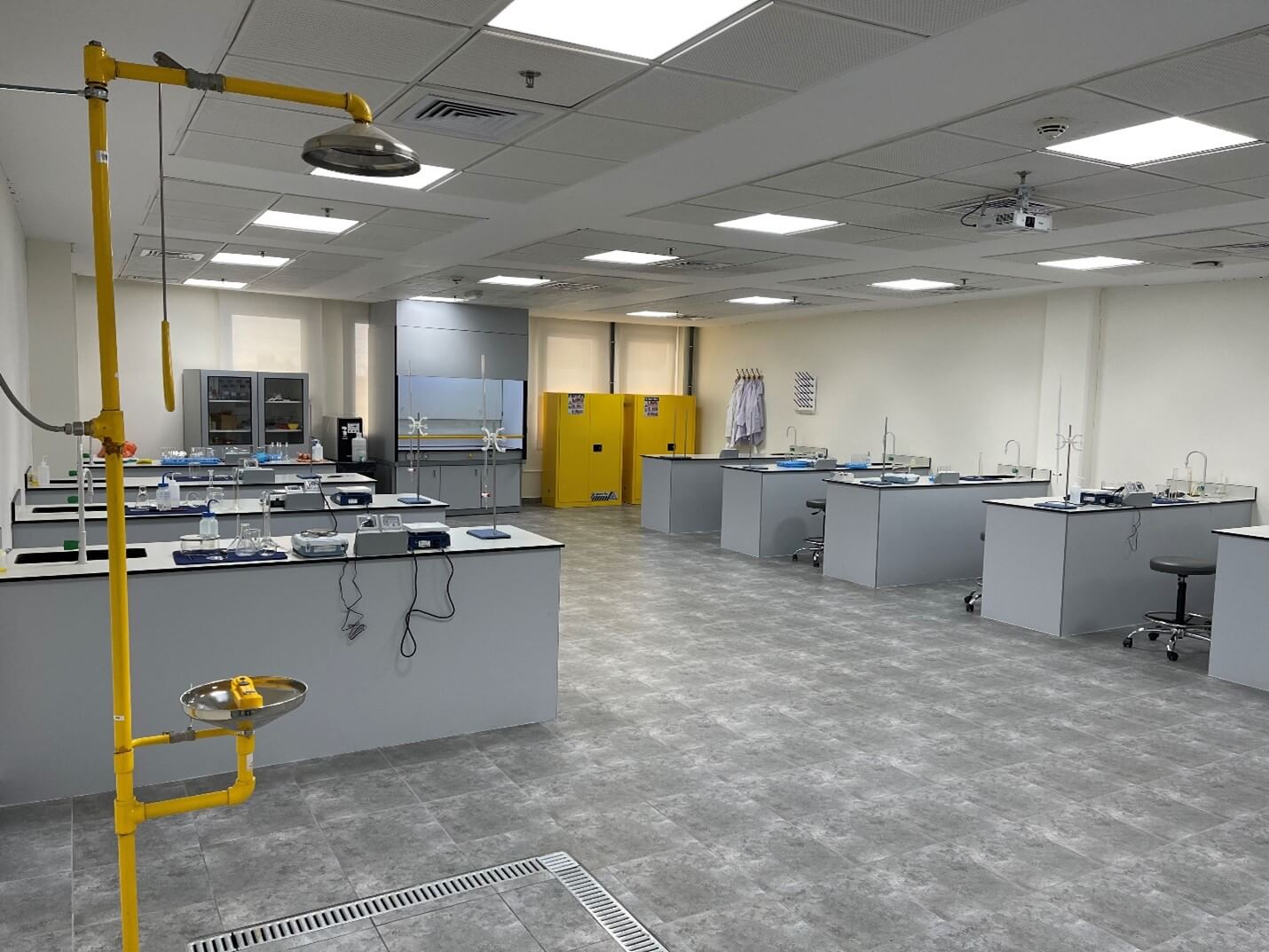
The Chemistry Lab is primarily utilized by the Chemical Engineering Technology (CHT) and Petroleum Engineering Technology (PET) programs. It provides students with practical hands-on experience in applying chemical principles learned in the classroom to real-world experiments and analyses.

Key Features:

The lab features nine benches, each accommodating three students, fostering collaborative experimentation and learning. Experiments conducted within this lab revolve around principles of general chemistry, including the preparation of standard solutions, fundamental techniques in acid-base and redox titrations, and analytical chemistry methodologies such as pH-metry and precipitation reactions.

Student Opportunities:

Students enrolled in related courses have access to the Chemistry Lab during designated lab hours. This access provides them with an environment to explore and deepen their understanding of chemistry through hands-on experimentation. The lab experience is essential for students' understanding and application of chemical principles, preparing them for success in their academic coursework and future careers.

Design and Development Lab

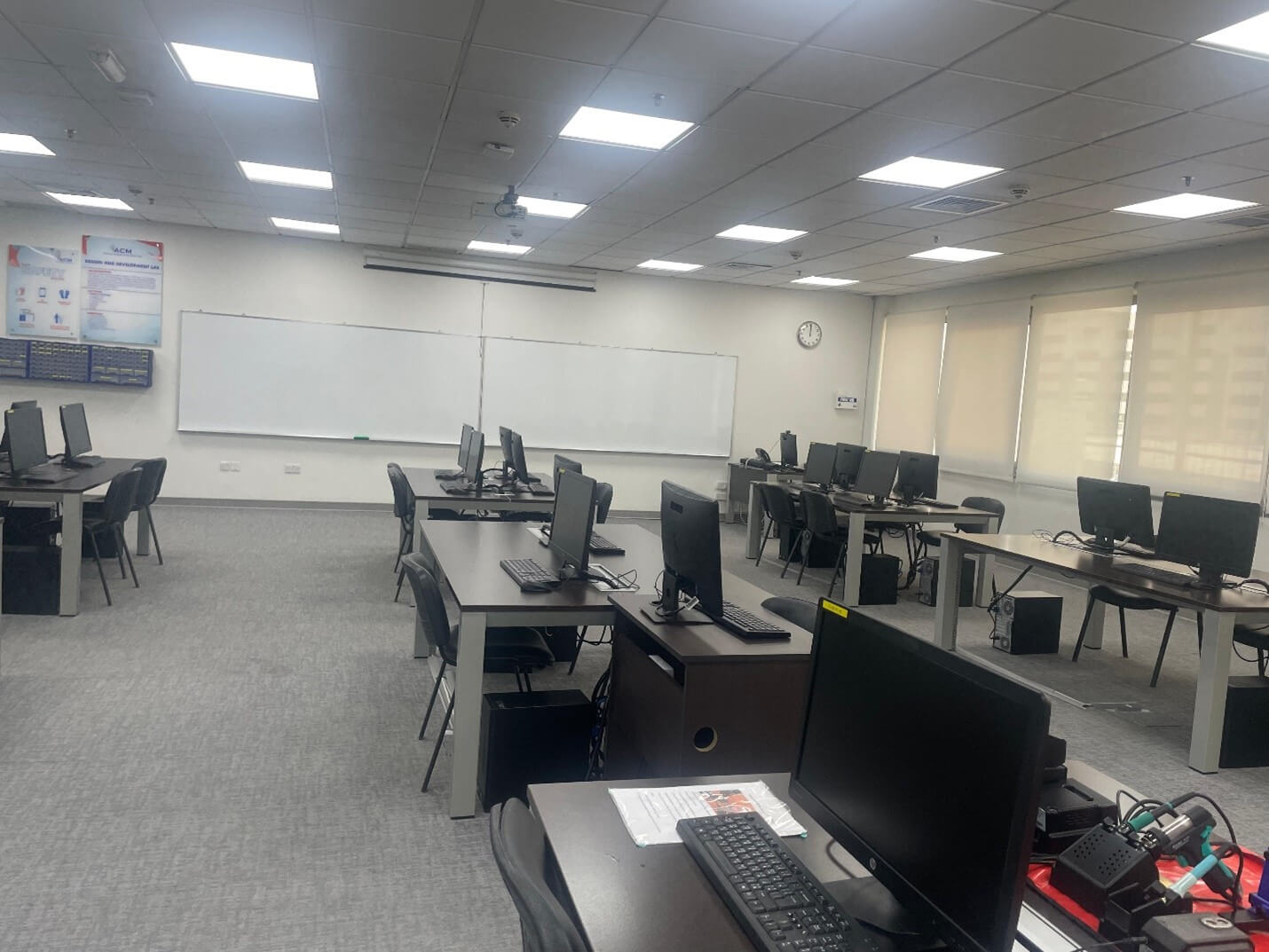
The Design and Development Lab is dedicated to the capstone projects of the Electrical Engineering Technology (EET) and Computer Engineering Technology (CET) programs. The students use PCB Prototyping to design and manufacture printed circuit boards-based projects.

Key Features:

There are PCs for each student and instructor, internet access, a projector, whiteboard, 3D printer, 3D scanner, milling machine, hand cutting tools, digital multimeters and four advanced soldering stations.

Student Opportunities:

This lab is the workspace for capstone course students. It provides the tools, technology, and support for students to complete real-life application projects.

Capture CIS, PCB Editor, Padstack Editor AutoCAD, MATLAB, and Arduino are the software to support, visualize and test the students project ideas from conception to completion. Also, it has a 3D scanner, 3D printer, milling machine, hand cutting tools, digital multimeters, and top-of-the-line soldering stations to provide a convenient prototyping and testing environment.

Digital Logic Circuits Lab

The Digital Logic Circuits Lab is a specialized teaching and experimentation space designed to support hands-on learning in digital logic and programmable hardware. It serves students in Electrical Engineering Technology (EET) and Computer Engineering Technology (CET) programs by providing an integrated environment for designing, simulating, and implementing digital circuits. Using Quartus II software on dedicated student PCs, learners develop logic designs that are subsequently tested and validated on FPGA boards, while complementary instruments such as signal generators, logic analyzers, and DC power supplies enable systematic analysis and troubleshooting of digital systems.

Key Features:

The Digital Logic Circuits Lab is equipped to support digital design activities, combining software-based development with hardware-level verification. Each student is provided with a dedicated PC installed with Quartus II for designing and simulating logic circuits, while FPGA boards enable real-time testing and implementation. The lab is further supported by essential instrumentation, including signal generators, logic analyzers, and DC power supplies, creating an environment that reflects standard practices in digital and embedded systems labs. It is primarily utilized for the CET and EET programs.

Student Opportunities:

Through structured lab exercises and independent experimentation, students gain practical exposure to the complete digital design workflow, from conceptual logic formulation to physical realization on FPGA hardware. The lab environment encourages the development of debugging and verification skills using professional tools, fostering a deeper understanding of digital system behavior. This experiential learning approach supports the integration of theoretical knowledge with applied engineering practice, preparing students for advanced coursework and industry-oriented technical roles.

Drilling Simulation Lab

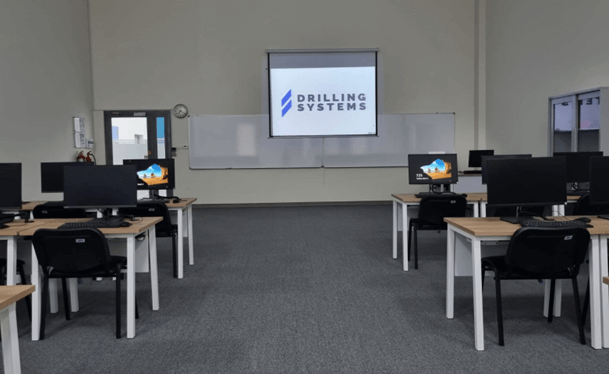
The Drilling Simulation Lab provides essential education for students pursuing Petroleum Engineering Technology. It focuses on utilizing industry-leading software to introduce students to drilling operations in the oil and gas sector. By actively engaging with the DrillSim software, students acquire proficiency in inputting data, analyzing conditions, and calculating parameters crucial for effective well design

Key Features:

  • Includes 29 computers, a board, and a projector for interactive learning and data analysis
  • Utilizes DrillSim simulation software to simulate drilling operations and develop well designs based on completion data
  • Provides students with hands-on experience in inputting data, analyzing conditions, and calculating parameters essential for well design.

Student Opportunities:

Students can gain hands-on experience by actively engaging with the DrillSim simulation software, conducting virtual drilling operations, and analyzing the outcomes. The lab environment encourages collaborative learning and provides students with the platform to explore the practical application of theoretical concepts.

Electrical Circuits and Systems Lab

The Electrical Circuits and Systems Lab is designed to provide students with a strong practical foundation in electrical engineering fundamentals. The lab focuses on hands-on experiments with DC and AC circuits and applied topics such as frequency filters, and operational amplifiers. This lab is primarily used for linear circuits analysis lab courses.

Key Features:

The lab consists of 10 workstations, each with two student PCs licensed with OrCAD Capture CIS and MathWorks MATLAB. Workstations are equipped with DC power supplies, digital multimeters, function generators, and oscilloscopes, providing students with a hands-on environment to build, measure, and analyze DC and AC circuits.

Student Opportunities:

The lab emphasizes practical understanding of electrical circuits fundamentals, frequency filters, and operational amplifiers, supporting students in applying theoretical concepts through experiments. Through these experiments, students apply theoretical concepts in a hands-on setting and strengthen their understanding of fundamental electrical engineering principles.

Electric Power and Control Lab

The Electric Power and Control Lab supports the study of electromechanical motion devices by providing hands-on experience with power systems and industrial control applications. The lab introduces magnetic materials, transformers, power conditioning equipment, electric motors, single-phase and three-phase power systems.

Key Features:

The lab is equipped with 24 student PCs licensed with OrCAD Capture CIS and Festo Didactic LabVolt software. It features two LabVolt workstation sets, four PLC equipment sets with input and output devices, and pegboards with industrial contactors, circuit breakers, and timer relays, providing a comprehensive environment for students to study and test electromechanical motion devices and systems.

Student Opportunities:

Students develop practical skills in power system operation, motor control, and industrial automation, preparing them for careers in electrical power, control systems, and related electrical engineering fields.

Electronic Design Lab

The Electronic Design Lab supports hands-on learning in electronic circuit design and analysis. Students simulate and build electronic circuit configurations on breadboards based on schematic diagrams to examine circuit behavior and performance.

Key Features:

The lab features 10 workstations, each with two student PCs licensed with OrCAD Capture CIS and MathWorks MATLAB. Equipped with DC power supplies, digital multimeters, function generators, and oscilloscopes, the lab provides students with a complete environment to design, simulate, and test electronic circuits on breadboards, fostering practical experience in electronic design and analysis.

Student Opportunities:

Students gain hands-on experience in simulating, wiring, and testing electronic circuits as rectifiers and amplifiers, exploring their behavior and principles of operation. Through these activities, they strengthen their practical skills and deepen their understanding of fundamental electronic design concepts, preparing them to apply theory to real-world circuit design challenges.

Embedded Systems Lab

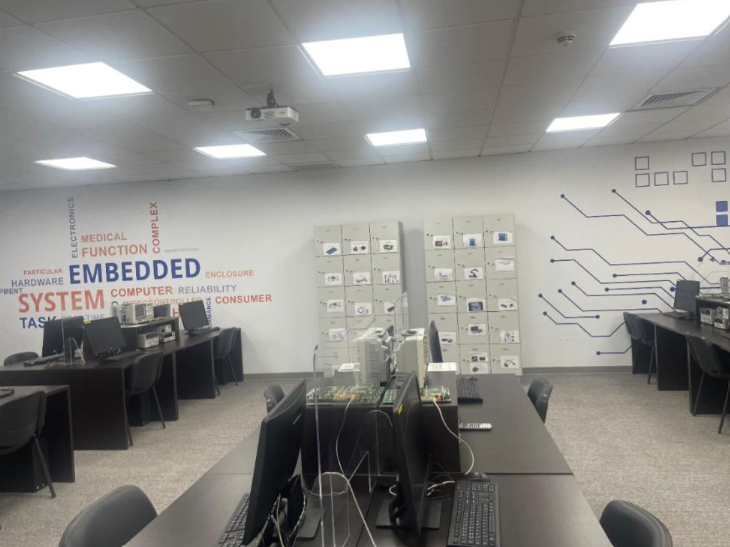
The Embedded Systems Lab is dedicated to CET and EET students to learn about embedded systems, focusing on the design and implementation of microcontroller-based projects. This lab offers broad learning from basic LED control to more complex peripheral management, and students learn to utilize the PIC16F877A Microcontroller in various scenarios.

Key Features:

Equipped with signal generators, power supplies, PCs for instructor and every student, projector for interactive learning and EasyPic Development Boards.

Student Opportunities:

Through hands-on projects and exercises, students can develop skills in both assembly language and C programming, tailored to embedded systems design and applications.

EasyPIC Development Board has a wide range usage to create and test programs that interact with and control various peripherals, providing a glimpse into the possibilities of embedded technologies including real-world applications.

Engineering and Technology Fundamentals Lab

The Engineering and Technology Fundamentals Lab provides students with practical, hands-on experiences that introduce fundamental engineering and technology concepts, problem-solving methodologies, teamwork, and the engineering design process. The lab serves as a foundation for developing analytical, technical, and creative thinking skills by connecting theoretical knowledge with real-world engineering applications.

Key Features:

The lab supports multidisciplinary engineering and technology activities that encourage students to develop solutions to engineering challenges. Through model development activities, small projects, engineering investigations, and quantitative analyses, students gain experience in applying engineering principles to solve practical problems. The lab incorporates modern engineering tools such as Excel, Arduino, and MATLAB, enabling students to analyze data, evaluate alternative solutions, and communicate engineering findings.

Student Opportunities:

Students utilize the lab during scheduled sessions to work collaboratively on projects, design activities, and problem-solving exercises. These experiences foster the development of teamwork, communication, ethical and professional conduct, and critical thinking skills. The lab environment encourages creativity, continuous learning, and the practical application of engineering fundamentals, preparing students for advanced engineering studies and future professional careers.

Ergonomics Lab

The Ergonomics Lab is primarily utilized by the Industrial Engineering Technology (IET) program. It provides students with hands-on experience in applying ergonomics principles introduced in the classroom to practical activities related to both physical and cognitive ergonomics.

Key Features:

The lab is equipped with a variety of ergonomics-related tools and equipment that support hands-on learning. Activities conducted in this lab focus on both physical and cognitive ergonomics, including anthropometric measurements, posture and workload assessment, safety evaluation, and human–system interaction using models and simulation tools.

Student Opportunities:

Students enrolled in the Industrial Engineering Technology (IET) program have access to the Ergonomics Lab during scheduled lab hours. This access allows students to enhance their understanding of ergonomics concepts through hands-on activities and practical assessments. The lab experience is essential for reinforcing theoretical knowledge and supporting students in applying ergonomics principles in academic work and future professional practice.

Geology and Exploration Lab

The Geology and Exploration Lab is dedicated to the study of Earth's subsurface, focusing on key aspects such as petroleum formation, rock properties, and exploration techniques. Students gain practical insights into the petroleum exploration and resource assessment.

Key Features:

  • Includes 20 computers, a board, and a projector for interactive learning and data analysis.
  • Equipped with essential tools including microscopes, rock samples, geological core samples, fossils and hardness kits for hands-on learning.

Student Opportunities:

The Geology and Exploration Lab provides valuable opportunities for students enrolled in Petroleum Engineering courses such as Petroleum Geology and Petroleum Exploration. Students can engage in practical exercises to interpret seismic data, analyze well logs, and examine rock samples. The lab environment fosters collaborative learning and encourages students to explore the application of theoretical concepts in real-world scenarios.

Geomatics and Surveying Lab

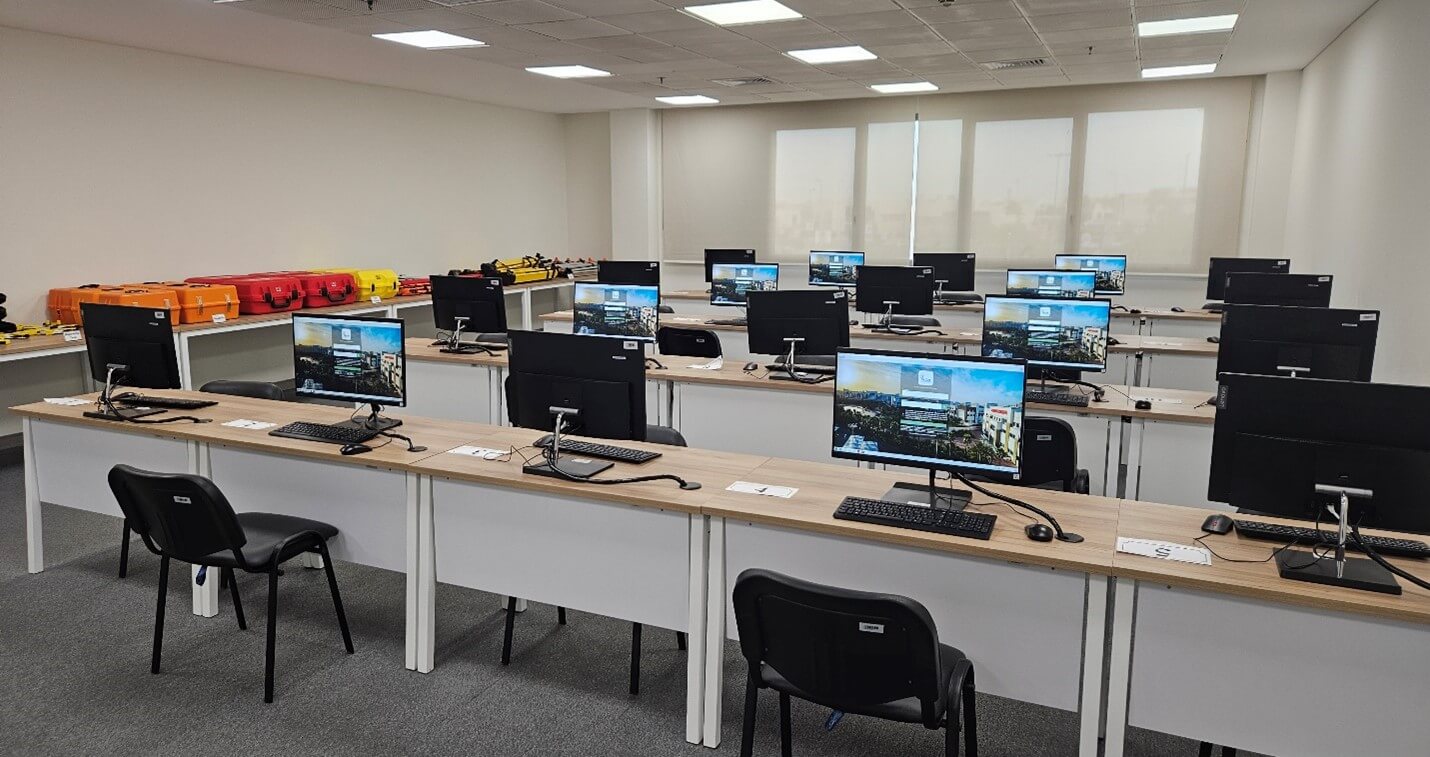
The Geomatics and Surveying Lab offers students hands-on experience in modern land surveying and geospatial analysis. Through practical exercises, students learn to use tools for accurate data collection and processing. The lab emphasizes Geographic Information Systems (GIS), enabling students to create and analyze maps.

Key Features:

  • Equipped with 20 computers, a board, and a projector to facilitate interactive learning and collaborative design projects.
  • AutoCAD, Civil3D, Revit and QGIS software programs are installed on all computers to provide students with industry-standard tools for design and engineering.

The lab offers a range of tests and experiments, that utilize the following surveying equipment:

  • Automatic Level
  • Digital Theodolite
  • Total Station
  • Odometer
  • Measuring Tape
  • GNSS Receivers

Student Opportunities:

The Geomatics and Surveying Lab opens an opportunity for students interested in mapping, spatial analysis, and civil engineering projects. It allows them to develop the skill of precision measurement, translating raw field data into detailed plans and 3D models. They learn how to analyze terrain and understand land boundaries.

Manufacturing and Prototyping Lab

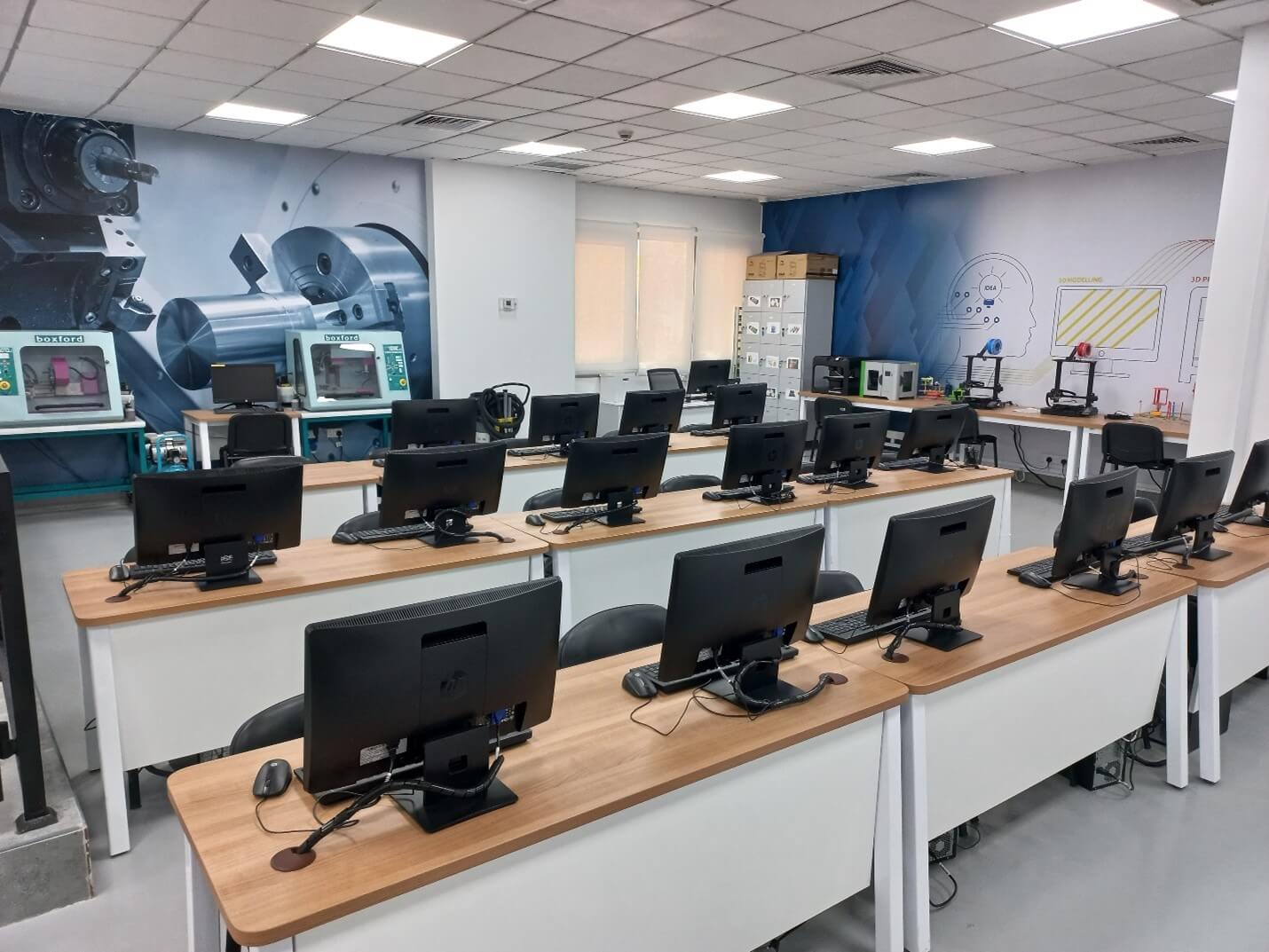
The Manufacturing and Prototyping Lab at ACM is an innovative facility dedicated to hands-on learning in the field of manufacturing and prototyping. This lab is equipped with machinery and technology to support student projects and coursework, including the Basic Machining capstone course. Additionally, the lab houses an area for concrete materials testing, which provides students with the tools and environment necessary to enhance understanding of concrete behavior.

Key Features:

  • Features specialized equipment such as a CNC mill, CNC lathe, 3D scanner, and 3D printers to enable precision machining and rapid prototyping.
  • Concrete testing area that houses equipment to perform concrete mixing and test the properties of concrete.
  • Includes 16 computers, a board, and a projector for interactive learning and project presentations.
  • Boxford, AutoCAD 2023, and SOLIDWORKS 2021 software installed on all computers to provide students with industry-standard tools for design and manufacturing.

Student Opportunities:

In addition to supporting coursework, the Manufacturing and Prototyping Lab serves as the primary workspace for students enrolled in the capstone project course. This course provides students with the opportunity to apply their knowledge and skills to real-world engineering challenges, culminating in the design, development, and fabrication of innovative projects. Within the lab, students have the opportunity to gain hands-on experience in manufacturing processes, including CNC machining, 3D scanning, and additive manufacturing. Through practical exercises students develop essential skills in design, fabrication, and problem-solving, preparing them for careers in manufacturing, engineering, and related fields. The lab also provides students with valuable hands-on experience in mixing and testing concrete, allowing them to understand the properties and interactions of materials like cement, aggregates, and admixtures.

Material Testing Lab

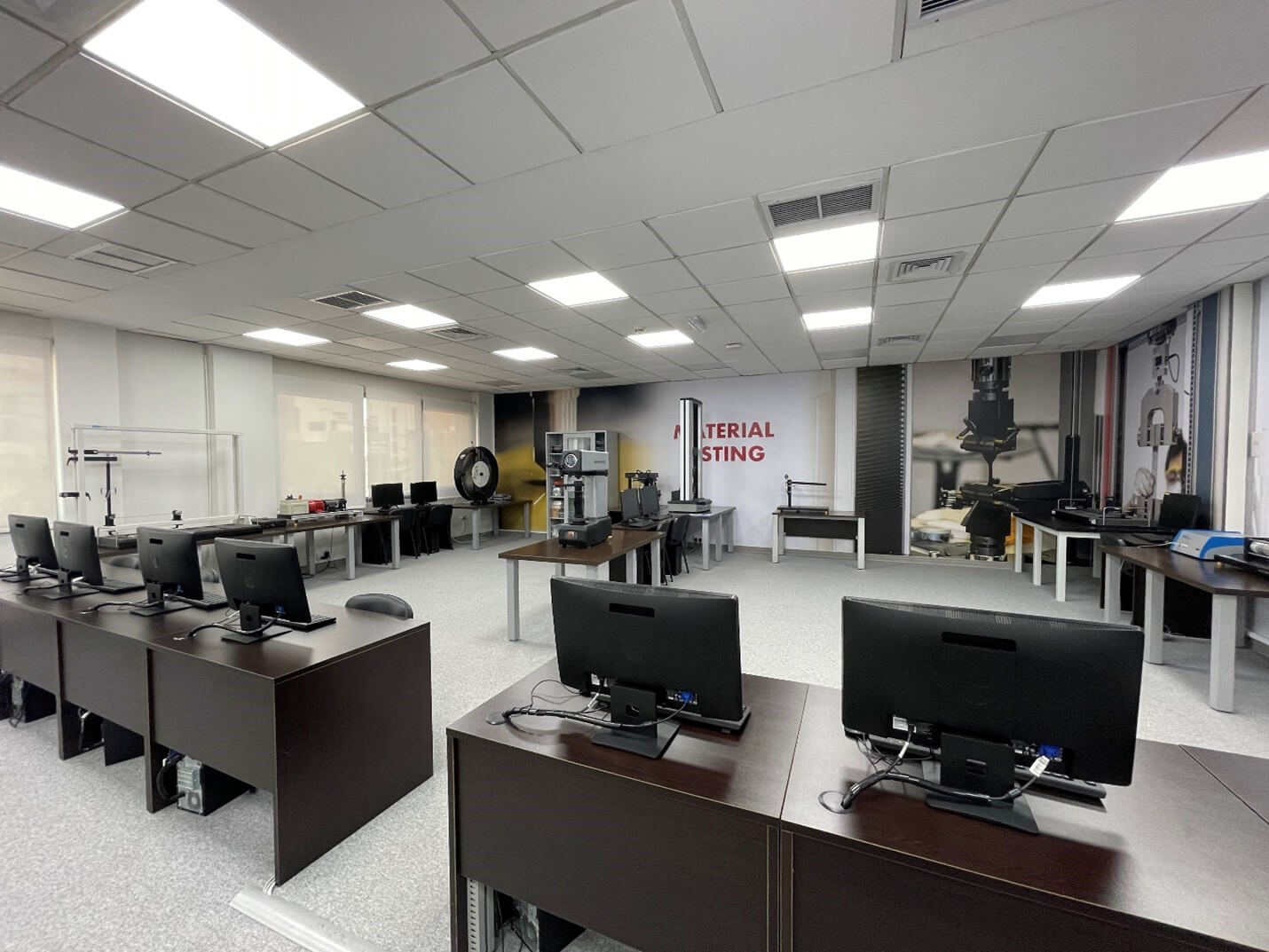
The Material Testing Lab at ACM is designed to support hands-on learning in the field of Mechanical Engineering Technology. This lab is equipped with a wide range of testing equipment and resources to facilitate experiments and analysis related to the structure and properties of material. Additionally, the lab is equipped with a 3D printer to further enhance practical learning.

Key Features:

  • Houses equipment for conducting hardness, tensile, fatigue, impact, creep, bending, torsion tests and 3D printing
  • Includes 16 computers, a board, and a projector for interactive learning and data analysis.

Student Opportunities:

The lab serves as a valuable resource for students enrolled in courses such as Structure and Properties of Materials and Mechanics of Materials. Students have the opportunity to gain practical experience by performing experiments, analyzing data, and drawing conclusions based on their findings. The lab environment fosters collaborative learning and encourages students to explore the application of theoretical concepts in real-world scenarios.

Mechanical Design Lab I

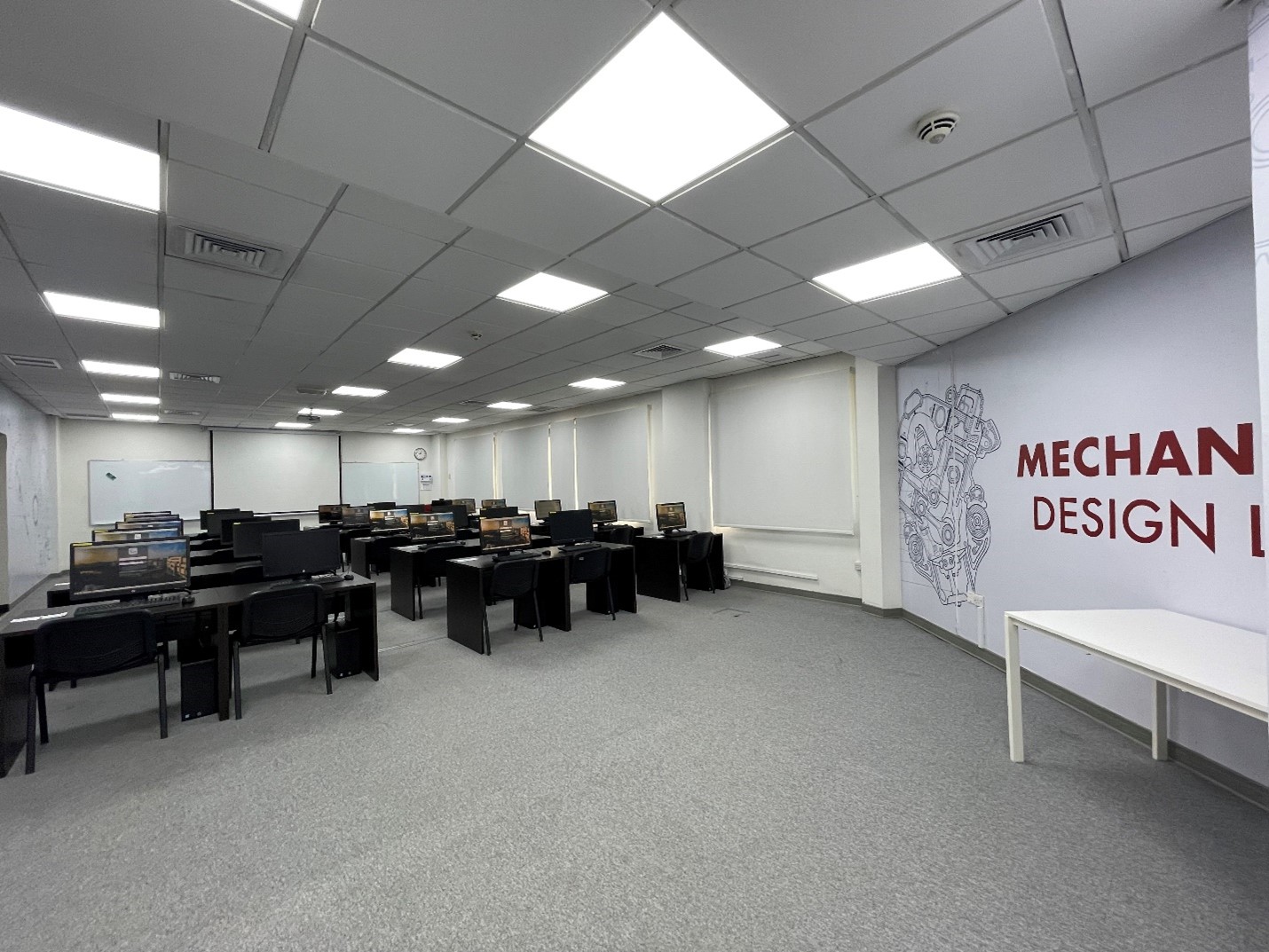
The Mechanical Design Lab I at ACM is a dedicated workspace tailored to support students in their exploration of mechanical design principles and software applications. This lab provides essential resources for students enrolled in courses such as Graphical Communications and Spatial Analysis and Introduction to Mechanical Engineering Design, Innovation, and Entrepreneurship.

Key Features:

  • Equipped with 25 computers, a board, and a projector to facilitate interactive learning and collaborative design projects.
  • AutoCAD 2023 and SOLIDWORKS 2021 software installed on all computers to provide students with industry-standard tools for design and engineering.

Student Opportunities:

Students have the opportunity to develop essential skills in computer-aided design (CAD). Through hands-on exercises and projects, students can explore concepts such as 2D drafting, 3D modeling, assembly design, and simulation. The lab environment encourages creativity, problem-solving, and collaboration among students as they work on real-world design challenges.

Mechanical Design Lab II

The Mechanical Design Lab II is designed to support studies and projects in mechanical engineering design. It is equipped with CAD software to facilitate hands-on learning and experimentation for students enrolled in courses such as Graphical Communications and Spatial Analysis and Introduction to Mechanical Engineering Design, Innovation, and Entrepreneurship.

Key Features:

  • Equipped with 29 computers, a board, and a projector to support interactive learning.
  • Features a 3D printer to enable rapid prototyping and fabrication of physical models and prototypes.
  • AutoCAD 2023 and SOLIDWORKS 2021 software installed on all computers to provide students with industry-standard tools for design and engineering.

Student Opportunities:

Students have the opportunity to advance their skills in computer-aided design (CAD), prototyping, and product development. Through hands-on projects and exercises, students can explore design concepts, conduct simulations, and bring their ideas to life through 3D printing technology. The lab fosters a collaborative and innovative environment where students can apply their theoretical knowledge to real-world engineering challenges.

Network Lab

The Network Lab is designed to support hands-on learning and practical experimentation in computer networking and wireless communications. The lab simulates real-world network environments and provides students with direct experience in configuring and managing networking systems. It supports key courses in the IT Program such as Data Communications & Networking and the Wireless Networks Capstone course, as well as the Introduction to Computer Communication Networks course in the Computer Engineering Technology (CET) program.

Key Features:

  • Equipped with four network racks, each containing three Cisco switches and two Cisco routers to simulate enterprise network infrastructures.
  • Includes nine Cisco Access Points, 18 TP-Link wireless routers, and five MikroTik wireless routers for configuring and testing wireless networks.
  • Supports both wired and wireless network design, configuration, troubleshooting, and performance analysis.
  • Enable students from both IT and CET programs to work with industry-standard networking devices and protocols in a controlled academic environment.

Student Opportunities:

Students gain practical experience in designing, configuring, and securing both wired and wireless networks. Through hands-on labs and capstone projects, they develop skills in network setup, routing and switching, wireless deployment, and network troubleshooting. The lab prepares students for real-world networking roles and industry certifications while reinforcing theoretical concepts through applied practice.

Physics Lab

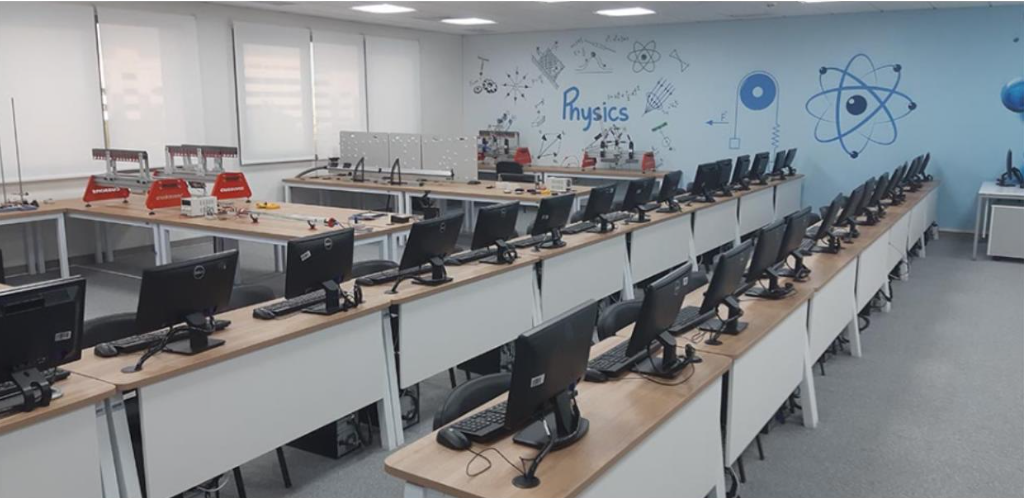
The Physics Lab is designed to foster hands-on learning and research in the field of Engineering Technology. This lab is fully equipped with advanced setups and tools to facilitate experiments and analyses related to various physics principles and phenomena.

Key Features:

The lab offers a broad spectrum of experiments, including but not limited to:

  • Free Fall and Projectile Motion to understand the effects of gravity and initial velocity on the trajectory of objects.
  • Mechanical Energy Conservation to explore energy transformations in a roller coaster set up.
  • Thermal Conduction to investigate the transfer of heat through different materials.
  • Speed of Sound to measure how fast sound travels at different temperatures.
  • Variable G-Pendulum and Hooke’s Law to examine the principles of pendular motion and elastic forces.
  • Static Equilibrium to analyze the conditions under which objects remain at rest or in a constant state of motion.

Student Opportunities:

This lab is used by students enrolled in the Modern Mechanics course. It provides students with the unique opportunity to engage directly with the physical world through experimental setups, enhancing their understanding of physics principles. The lab environment promotes collaborative learning, allowing students to apply theoretical concepts to practical situations and encouraging them to conduct experiments, analyze data, and formulate conclusions.

Reaction Engineering Lab

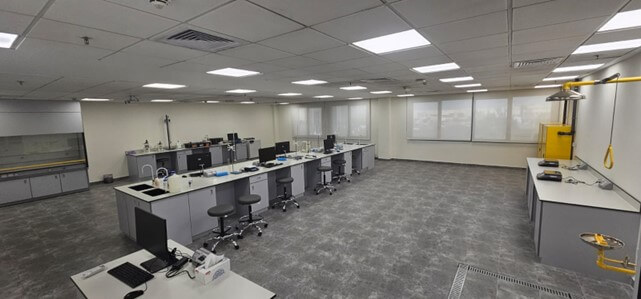
The Reaction Engineering Lab includes multiple equipment to test different reactors studied in the Reaction Kinetics and Reactors course. It enables students to analyze chemical reaction parameters and kinetics effectively.

Key Features:

The lab offers a range of reactors and equipment, including:

  • Different chemicals required for the lab along with all safety requirements
  • Transparent Batch Reactor
  • Continuous Stirred Tank Reactor (CSTR)
  • Plug Flow Reactor (PFR)
  • Chilled Water Circulator

Student Opportunities:

The Reaction Engineering Lab provides students with hands-on experience in exploring various reactors and chemical reactions. Throughout the lab, students learn about the operational differences, and industrial applications of batch, continuous stirred-tank, and plug flow reactor. Students also investigate the effects of temperature, agitation, and concentration on reactant conversion rates, and determine reaction order, rate constants, and conversion kinetics over time.

Structural Engineering Lab

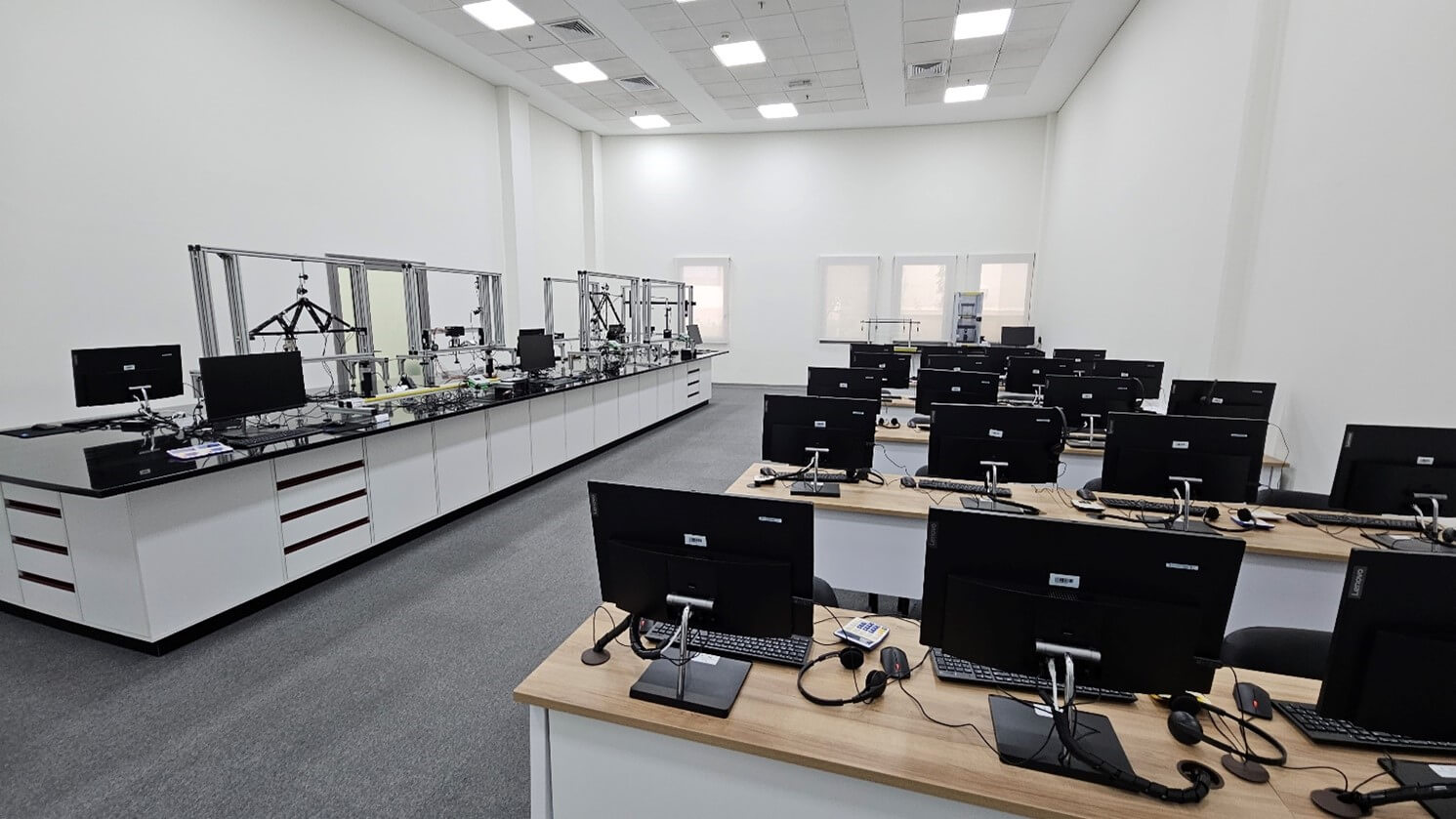
The Structural Engineering Lab offers the students practical learning of structural mechanics and analysis. Through a series of experiments, they explore the fundamental concepts of force, tension, compression, and material properties. The lab activities are designed to simulate real-world scenarios, allowing students to observe the behavior of various structures and materials under different stresses and strains.

Key Features:

The lab offers a range of tests and experiments, that utilize the following equipment:

  • Reaction of Beams Apparatus
  • Universal Material Tester
  • Pin Jointed Frameworks
  • Redundant Truss
  • Frame Deflection Apparatus
  • Advanced Beam Testing Apparatus
  • Buckling Apparatus
  • Torsion Testing Apparatus
  • Beam Bending Stress Apparatus

It is equipped with 20 computers, a board, and a projector to facilitate interactive learning and collaborative design projects. AutoCAD, Civil3D, Revit and QGIS software programs are installed on all computers to provide students with industry-standard tools for design and engineering.

Student Opportunities:

In this lab, students explore the fundamental principles behind the strength and stability of structures. They get hands-on experience testing various materials and structural components, analyzing how they behave under different loads and stresses. The lab bridges the gap between theory and practice, enabling students to examine how beams bend, materials deform, and structures fail.

Unit Operations Lab

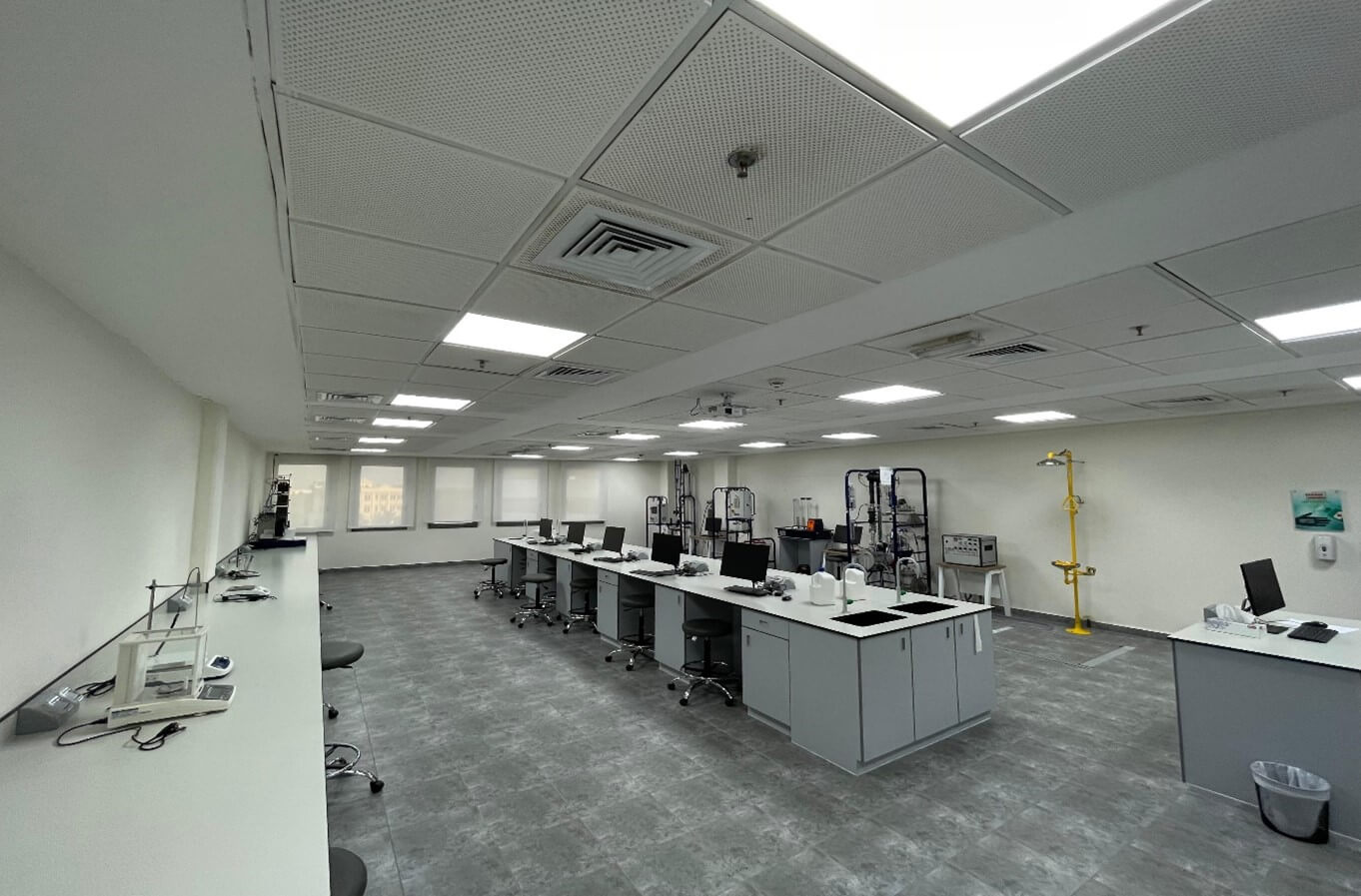
The Unit Operations Lab is where students learn about various unit operations and chemical engineering equipment. It serves as a guide for students to visualize and operate scaled down versions of essential industrial equipment that they will work on after they graduate.

Key Features:

The lab offers a range of Unit Operations, including:

  • Distillation Column
  • Liquid-Liquid Extraction Equipment
  • Gas Absorption Apparatus
  • Fixed and Fluidized Beds
  • Cooling Tower

Also, it contains computers with Aspen Software for students to simulate process equipment

Student Opportunities:

Students are equipped with practical skills essential for applying theoretical knowledge to scaled-down versions of industrial equipment. Additionally, the lab includes simulation of one of the processes using ASPEN Plus software to illustrate a comparison between scaled-down equipment and simulation software. Each unit operation is accompanied by its own experiment, allowing students to interact with operational procedures and grasp the relationship between different parameters in the equipment.